

South Africa is a country of contrasts, extremes, and paradoxes. Leafy suburbs sit adjacent to tin-shack townships. Obscene wealth and luxury consumption co-exist with extreme poverty and deprivation, resulting from the world’s highest level of income inequality. There is more than enough food to feed everyone, but hunger and malnutrition are widespread. Child stunting is rising, but so is obesity. Supermarkets are making super-profits while millions of consumers remain hungry. South Africa’s social protection system is the most comprehensive in Africa, but it is insufficient – most social grant recipients cannot afford a nutritious diet.
Given this context, the Union Against Hunger commends the South African Human Rights Commission (SAHRC) for launching its National Inquiry into the Food Systems of South Africa, under the title ‘Politics, Power, and the Right to Food’. The Union Against Hunger concurs that the constitutional right to sufficient food of “everyone” in South Africa is being violated, because of political failures to close the policy-implementation gap and abuses of power, especially corporate power in the food system. This Inquiry is timely, because the unnecessary suffering caused by avoidable hunger and malnutrition is currently receiving a great deal of media attention and public concern, but not yet political or corporate action. This SAHRC Inquiry has the potential to change this, and to contribute to eradicating hunger in South Africa.
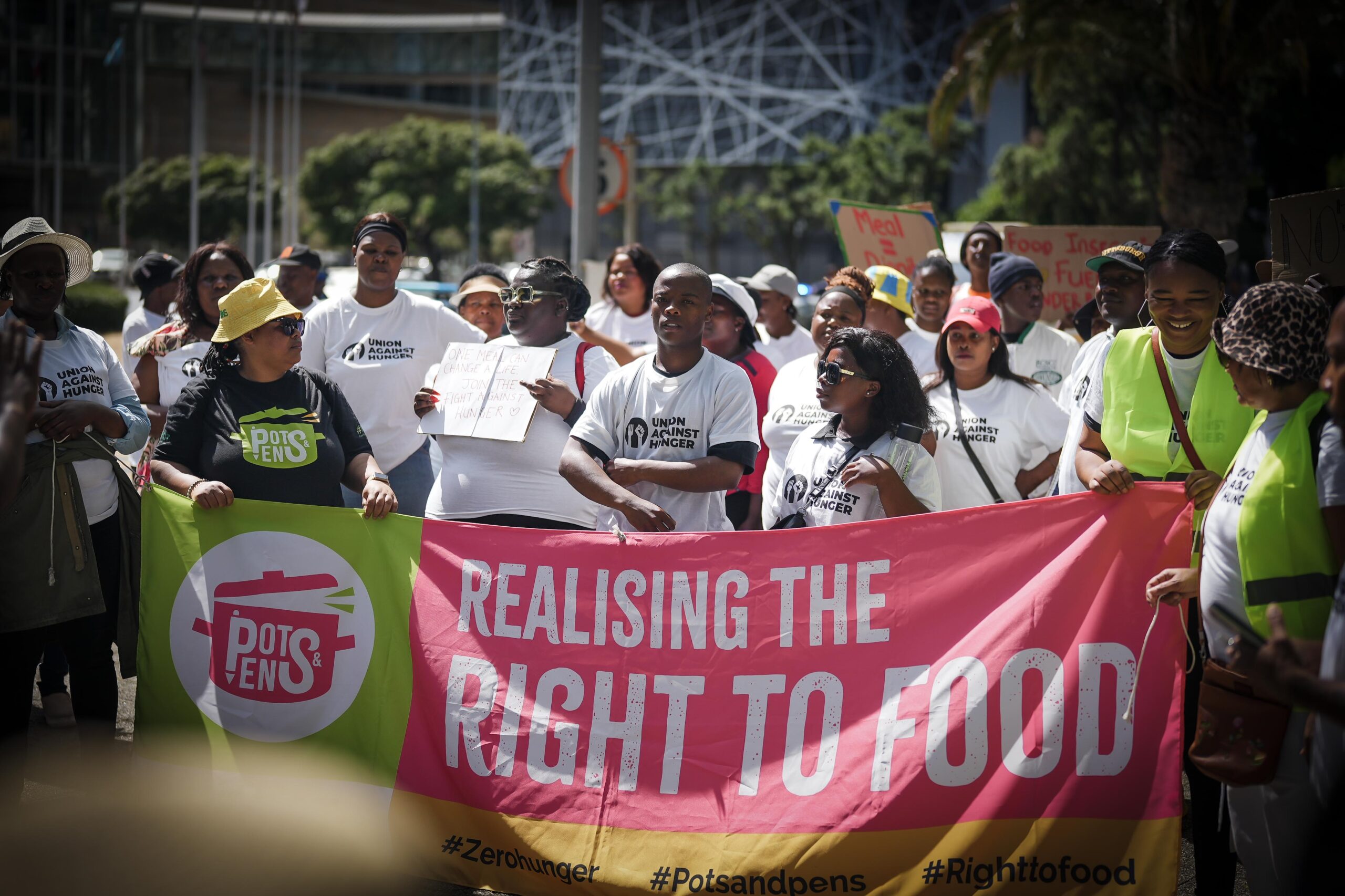
This submission is made by the Union Against Hunger (UAH), a South African right to food and nutrition activist movement launched in February 2025, dedicated to addressing hunger and malnutrition as a critical social justice issue. Grounded in a commitment to food equity, human rights, and solidarity, this alliance of over 50 organisations and social movements seeks to transform South Africa’s food systems, bridge the gap between rhetoric and tangible action by advocating for the immediate implementation of appropriate policies, empowering communities, and driving systemic change towards ending food insecurity.
This submission addresses four of the seven “issues for investigation” identified by the SAHRC in the Terms of Reference for this Inquiry:
- The structural dynamics and economic factors that perpetuate hunger and systemic exclusions, despite national food sufficiency (section 2 below).
- The concentration of power in the food value chain and its impact on access, affordability, and nutritional quality (section 3).
- Institutional coordination, policy coherence, and legislative adequacy in realising the right to food (section 4).
- The role of civic participation, public accountability, and social movements in advancing the right to food (section 5).
- Recommendations are collated in the final part of this document (section 6).
Leave a Reply